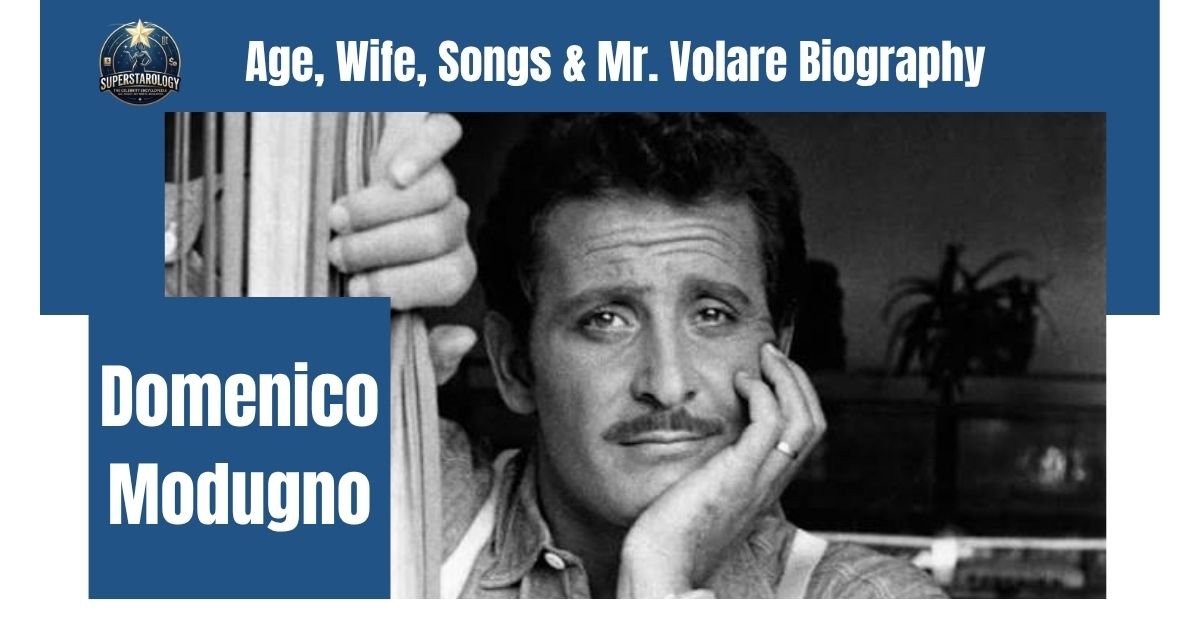
Domenico Modugno: The Life, Family and Legacy of Italy’s “Mr. Volare”
Domenico Modugno (January 9, 1928 – August 6, 1994) was an Italian singer-songwriter, actor and politician known worldwide as “Mr. Volare.” Born in Polignano a Mare, he co-wrote “Nel blu dipinto di blu,” won the first-ever Record of the Year and Song of the Year Grammys in 1959, and later served in Italy’s Parliament.
Think of a song that makes a whole room sing along with open arms. For millions of people, that song is “Volare.” But who was the man behind it? Domenico Modugno was far more than a one-hit wonder. He was a self-taught guitarist, a film actor, a stage performer, and later a lawmaker who spoke up for disabled people.
Audiences in 1958 saw a singer who stretched his arms wide and sang like he meant every word. This guide covers his real name, family, height, career, politics, death and legacy, using publicly reported facts and clear hedges where details are uncertain.
Domenico Modugno Wiki / Quick Bio
| Field | Details |
| Full Name | Domenico Modugno |
| Nicknames | Mimì, Mimmo, “Mr. Volare” |
| Born | January 9, 1928 |
| Birthplace | Polignano a Mare, province of Bari, Apulia, Italy |
| Died | August 6, 1994 (age 66), Lampedusa, Sicily, Italy |
| Age Today | Would have been 98 in 2026 (99 on January 9, 2027) |
| Height | About 5 ft 9 in (roughly 1.74–1.75 m, as commonly reported) |
| Weight | Not reliably documented |
| Occupation | Singer-songwriter, actor, film producer, politician |
| Education | Centro Sperimentale di Cinematografia, Rome (from 1951) |
| Years Active (music) | 1953–1993 |
| Genres | Pop, folk, Neapolitan song |
| Instruments | Vocals, guitar |
| Record Labels | Fonit Cetra, Decca, RCA, Carosello, Polydor and others |
| Best-Known Song | “Nel blu dipinto di blu” (“Volare”), 1958 |
| Career Highlights | 4 Sanremo wins; 1958 Eurovision (3rd place); first Grammy Record of the Year and Song of the Year winner (1959) |
| Political Career | Radical Party; Chamber of Deputies (1987–1990), Senate (1990–1992) |
| Spouse | Franca Gandolfi (married 1955; together until his death) |
| Children | Marco, Massimo, Marcello and Fabio |
| Parents | Vito Cosimo Modugno and Pasqua Lorusso |
| Net Worth | No verified figure is publicly documented |
| Wealth Sources | Record sales and royalties, film, theatre and TV work, songwriting |
| Social Presence | No personal accounts (died 1994); official website domenicomodugno.it |
Domenico Modugno Real Name and Nicknames
Domenico Modugno’s real name was simply Domenico Modugno. He never needed a stage name. The name was already memorable, and it sounded great on a record label.
Here is what you should know about the names attached to him:
- Domenico comes from the Latin Dominicus, often explained as “belonging to the Lord.”
- Modugno is also the name of a town in the province of Bari, not far from where he was born.
- Mimì was a nickname used in his early years. Reporting on his childhood describes him as a curly-haired boy known by that name.
- Mimmo is how Italian newspapers and his own wife have often referred to him.
- “Mr. Volare” (or “Mister Volare”) is the global nickname he earned after 1958.
If you want to say his name the Italian way, it sounds roughly like doh-MEH-nee-koh moh-DOON-yoh.
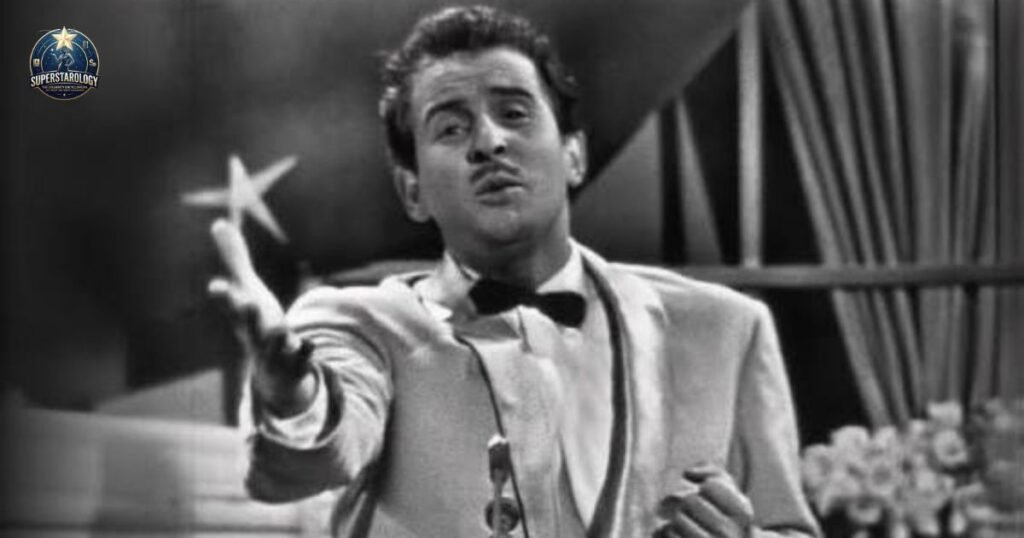
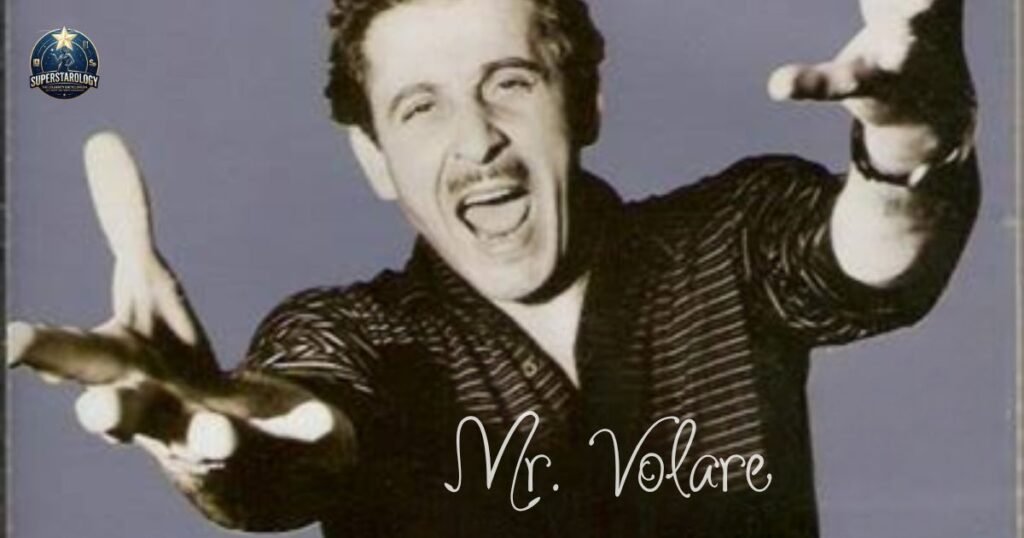
That last nickname says a lot about how fans see him. One song, written in a burst of creative energy, became his calling card on every continent. Yet in Italy, people often still think of him first as a cantautore, a singer who writes his own songs. That word matters, and we will return to it in the legacy section.
Domenico Modugno Early Life and Education
Domenico Modugno was born on January 9, 1928, in Polignano a Mare, a cliff-top town on the Adriatic coast in Apulia. He was the youngest of four children. His father worked as a municipal police commander, and his mother kept the home.
When Domenico was about nine, his father’s job brought the family to San Pietro Vernotico, in the Salento area. He went to primary school there and picked up the local dialect. That sound stayed with him. Over his career he sang in standard Italian, Neapolitan and Sicilian.
Here are the key early milestones:
- He attended secondary school in Lecce.
- He taught himself guitar and also played the accordion.
- He wrote his first song at around age 15, according to biographical accounts.
- At 19, he left his small-town life behind and moved north to Turin, where he found factory work.
- He then returned for national service before heading to Rome.
Rome is where his path got serious. In 1951 he joined the Centro Sperimentale di Cinematografia, Italy’s famous national film school. He won a bursary in an acting competition that opened the door. That training in acting explains something fans notice on old TV clips: he performs with his whole face and body, not only his voice.
Domenico Modugno Parents and Siblings
Domenico’s father was Vito Cosimo Modugno, a municipal police commander. His mother was Pasqua Lorusso (sometimes spelled “Lo Russo”), who worked as a housewife. Because of the father’s job, the family moved around the region, which is how they ended up in San Pietro Vernotico when Domenico was a child.
He was the youngest of four siblings. That is about as far as reliable public sources go.
Some online profiles list sibling names and dramatic family stories. We could not confirm those details in trustworthy sources, so this profile leaves them out. It is better to say less than to print something that may be wrong, especially about private people who never sought attention.
What we can say is that Modugno often returned to his southern roots in his music. His songs lean on the sounds, dialects and stories of Apulia, Naples and Sicily. His father’s profession and the family’s moves also gave him an early sense of life in different towns, which later helped him connect with audiences far from home.
A few more points help round out the picture:
- The family was not wealthy, and Modugno built his career from scratch.
- His parents’ names appear in standard biographical entries and film-industry databases.
- His own children later became part of the story, including his son Massimo, who is also a musician.
Domenico Modugno Wife, Children and Relationships
Domenico Modugno’s wife was Franca Gandolfi, an actress and variety performer. They met at the Centro Sperimentale in Rome. In later interviews, Gandolfi recalled that he was assigned as her partner for a screen test and surprised her with an unplanned kiss. She did not fall for him right away.
Love grew later. They married on June 26, 1955, in a civil ceremony in Rome and also held a church ceremony. They stayed married for 39 years, until his death in 1994.
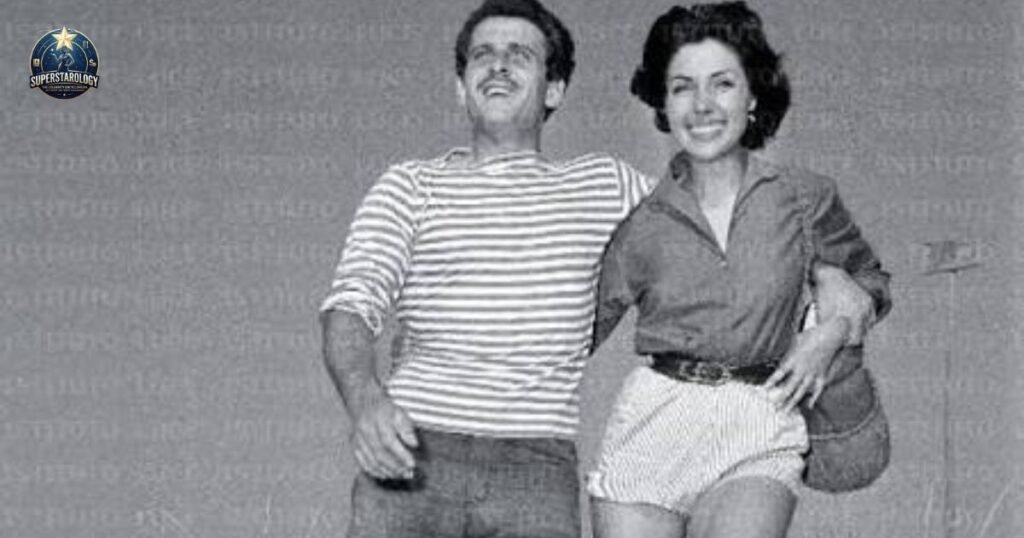
Their story was not always easy. Gandolfi has said life with him could be hard, since he was often away and fame brought tension. She has also spoken publicly about forgiving his infidelities.
His children
- Marco (born 1958)
- Massimo and Marcello (born 1966)
- Fabio (born 1962), from a separate relationship
Fabio’s story is one of the most widely reported parts of the Modugno family history. He was born to choreographer and dancer Maurizia Calì, who was married to someone else at the time. Fabio grew up as Fabio Camilli and later learned who his biological father was. After a long legal fight, a Rome court recognized him as Modugno’s son in January 2014. Italy’s Court of Cassation closed the case in August 2019, after roughly 18 years of proceedings. He is now known as Fabio Modugno and works as an actor.
Some databases list only three children, which is why you may see conflicting numbers online. Based on the court rulings, four is the figure supported by reporting.
Check Out Riley Green: Age, Height, Wife, Family, Net Worth and Career (2026 Biography)
How Old Was Domenico Modugno When He Died? Domenico Modugno Age, Height and Appearance
Domenico Modugno was 66 years old when he died on August 6, 1994. He was born on January 9, 1928, so he would have turned 98 in January 2026. His next milestone birthday would be his 99th on January 9, 2027.
Domenico Modugno Height and Build
Commonly cited sources list his height at about 5 feet 9 inches (around 1.75 m). One film database lists about 1.74 m. The difference is tiny, and both point to an average-to-slightly-tall Italian man of his generation. We do not include a weight figure because no reliable source documents it.
Appearance and Stage Presence
- Dark curly hair in his younger years, according to accounts of his childhood.
- An expressive face, trained by his acting studies.
- A famous gesture: arms stretched wide while singing, which later inspired his statue in Polignano a Mare.
A Big Health Turning Point
In 1984, Modugno suffered a severe stroke that left him partially paralyzed. Italian press later described how he kept giving concerts while seated. He stepped away from his music career for years, then returned in 1992–1993.
How Did Domenico Modugno Die?
He died of a heart attack at his home by the sea on the island of Lampedusa, off the south coast of Sicily. The house sat on the shore near the Isola dei Conigli (Rabbit Island), a protected nature area. The villa was put up for sale in 2020.
Check Out Aman Gupta Net Worth 2026: How Rich Is the boAt Co-Founder?
Domenico Modugno Before Fame
Before “Volare,” Domenico Modugno was a working actor and songwriter who kept knocking on doors. Many fans assume he was an overnight success. He was not.
Here is how the early years looked:
- Late 1940s: Factory work in Turin, then military service.
- Rome, 1950s: Small acting jobs while he studied at film school.
- 1951: A small part in Filumena Marturano, based on Eduardo De Filippo’s play.
- 1952: Stage work in Il borghese gentiluomo, which let him show off his singing.
- 1953: Radio appearances, including a music competition show on Italian radio.
- 1950s: A radio series with the state broadcaster RAI, where he wrote, produced and performed.
- 1957: His song “Lazzarella” finished second at the Festival della Canzone Napoletana, sung by Aurelio Fierro. It was his first real taste of fame.

Why does this period matter? It shows where his stage skills came from. Many singers of the era stood still behind a microphone. Modugno had acted in films and theatre, so he treated each song like a short play. When he finally reached a big stage, he already knew how to hold a room.
He was also working behind the scenes. In 1958, he discovered the comedy duo Franco and Ciccio and became their manager, helping launch a long film career for them. It is a fun reminder that he was always more than a singer.
Check Out Zach Bryan: Age, Wife, Net Worth, Height, Career and Life Story (2026)
Domenico Modugno Career: From Film Extra to “Mr. Volare”
The Breakthrough at Sanremo 1958
The turning point came in 1958 at the Sanremo Music Festival. Modugno presented “Nel blu dipinto di blu” together with Johnny Dorelli. The song was co-written with lyricist Franco Migliacci. It won the festival and instantly changed his life.
What Is Domenico Modugno Best Known For?
He is best known for “Nel blu dipinto di blu,” famously nicknamed “Volare.” The song went on to represent Italy at the Eurovision Song Contest 1958, where it finished third.
Here is why it matters from an industry view:
- It broke the mold. Sanremo songs of the time were polite and formal. This one was bold, swinging and almost shouted at the chorus.
- It crossed languages. The Italian original topped the US Billboard Hot 100 for five non-consecutive weeks in 1958 and was Billboard’s number one single of the year.
- It collected sales and awards. Sales across all versions are commonly estimated at more than 22 million copies.
- It made Grammy history. At the first Grammy Awards in 1959, it won both Record of the Year and Song of the Year.
English lyrics were added by Mitchell Parish. Covers followed from artists such as Dean Martin, Bobby Rydell, Barry White and David Bowie. Guinness World Records recognizes it as the biggest-selling Eurovision entry, and more than 100 different versions exist.
More Sanremo Wins and Eurovision Returns
Modugno won Sanremo again in 1959 with “Piove (Ciao, ciao bambina).” He took second place in 1960 with “Libero,” won a third time in 1962 with “Addio… Addio…,” and a fourth time in 1966 with “Dio, come ti amo.” He returned to Eurovision for Italy in 1959 and 1966. Elvis Presley later recorded his song “Io” in English as “Ask Me.”
Film, Theatre and Television
Modugno appeared in around 44 films and produced two, including the semi-autobiographical Tutto è musica (1963). In the 1970s he moved toward more classical and theatrical work, including adapting poetry, acting on television, and taking lead singing roles in modern operas.
Notable Works
| Year | Title | Notes |
| 1955 | “Vecchio frac” | Early signature song |
| 1956 | “Resta cu’mme” | Neapolitan-style classic |
| 1957 | “Lazzarella” | Second at Festival della Canzone Napoletana |
| 1958 | “Nel blu dipinto di blu” (“Volare”) | Sanremo winner, Eurovision 3rd, two Grammys |
| 1959 | “Piove (Ciao, ciao bambina)” | Sanremo winner, Eurovision entry |
| 1960 | “Libero” | Second place at Sanremo |
| 1962 | “Addio… Addio…” | Sanremo winner |
| 1966 | “Dio, come ti amo” | Sanremo winner, Eurovision entry |
| 1975 | “Piange… il telefono” | Hit single and film of the same name |
| 1993 | “Delfini (Sai che c’è)” | Last song, recorded with son Massimo |
Selected film and TV credits
| Year | Title | Role / Note |
| 1951 | Filumena Marturano | Lawyer Nocella |
| 1957 | Lazzarella | Mimì |
| 1960 | Appuntamento a Ischia | Mimmo Rotunno |
| 1963 | Tutto è musica | Himself; also director, writer, composer |
| 1976 | The Violin Teacher | Giovanni Russo |
Domenico Modugno Politics: From Stage to Parliament
Fans of “Volare” are often surprised to learn that Domenico Modugno was also an Italian lawmaker. His political life began after his health crisis in the mid-1980s.
After the 1984 stroke, he began working for disabled people’s rights in 1986. In June 1987 he was elected to the Italian Parliament for Turin on the Radical Party ticket. The Radical Party is a liberal-social group.
His record in office
- Chamber of Deputies: July 2, 1987 – April 18, 1990 (Turin)
- Senate: April 18, 1990 – April 22, 1992 (Rome)
Causes he took on
- Disability rights, a personal cause after his stroke.
- Conditions at the psychiatric hospital in Agrigento, Sicily. In 1989 he held a concert for former patients of the asylum.
- Earlier in life, he backed campaigns linked to the Italian Socialist Party and the campaign for divorce.
- He criticized human rights abuses under Chilean dictator Augusto Pinochet, and reports say this cost him entry to Chile, where he had been scheduled to perform.
His activism left a mark in Sicily. In 2017, the city of Agrigento dedicated a belvedere to him in thanks for his civic work.
This chapter shows a different side of Modugno. He used the same stubborn energy that carried “Volare” to push for people who rarely got a spotlight.
Check Out Zara Larsson: Age, Height, Net Worth, Family, Songs & Career
Domenico Modugno Social Media Presence
Domenico Modugno died in 1994, long before Instagram, TikTok or X existed. He has no personal social accounts. Any account that claims to be “his” is a fan page or tribute.
Here is where his music and memory live online today:
- Official website: domenicomodugno.it is the family-linked home for his biography and discography.
- Streaming and video: “Volare” and other tracks are widely available, and fans share vintage Sanremo and Eurovision clips.
- Tributes: Italian towns and cultural groups keep his name alive through events and exhibitions.
- Archival media: Film listings show a 2024 production about his life titled Domenico Modugno – L’italiano che incantò il mondo.
In 2026, Polignano a Mare planned a series of events from April 17 to 19 under its “Città della Musica” project, with Modugno at the center. Local and regional officials also announced a cultural agreement between Puglia and Sicily to promote the places linked to his life. Italian press has also reported on a poll that put “Volare” at the top of a list of Sanremo songs.
Check Out CMAT: Age, Bio, Family, Career and Net Worth of Ireland’s Country-Pop Star
Domenico Modugno Net Worth and Achievements
Net Worth
There is no verified net worth figure for Domenico Modugno. Online pages give widely different numbers, from a couple of million dollars to several million, but none show a source. Because estimates like these can mislead, we do not repeat them as fact.
What we can say, in hedged terms, is where his income most likely came from:
- Record sales and royalties from “Volare” and his wider catalog.
- Fees from concerts, television and international tours.
- Film, theatre and TV work across several decades.
- Songwriting and publishing income.
- Parliamentary pay during his political years.
Royalties have also been part of the family story. Reporting around Fabio Modugno’s legal recognition noted that it affected his place among the artist’s heirs for author’s rights.
Awards and Achievements
- 1st Annual Grammy Awards (1959): Record of the Year and Song of the Year for “Nel blu dipinto di blu.” Reports also note a nomination for best male vocal performance.
- Sanremo Music Festival: Four wins (1958, 1959, 1962, 1966) and a second place (1960).
- Eurovision Song Contest: Third place in 1958, plus entries in 1959 and 1966.
- Billboard: “Volare” was the number one single of 1958.
- Guinness World Records: Recognized for the biggest-selling Eurovision entry.
- 2005 Eurovision 50th anniversary vote: “Volare” came second behind ABBA’s “Waterloo.”
Check Out DJO (Joe Keery): Age, Height, Weight, Family, Career and Net Worth
Domenico Modugno Legacy and Impact
Many historians call Domenico Modugno the first Italian cantautore, a singer who writes his own material. That label shaped Italian pop for decades. After him, it became normal for a performer to bring a personal voice and story to the stage.
Why His Impact Lasted
- He opened doors abroad. “Volare” proved a song sung in Italian could top the US charts.
- He changed Sanremo. The 1958 win pushed the festival toward bolder, more personal songs.
- He mixed styles. His catalog moves between pop, folk, Neapolitan song and theatre.
- He kept growing. Late in life, he became a public voice for disability and mental health reform.
Places That Honor Him
- Polignano a Mare: A bronze statue of about three meters by sculptor Hermann Mejer was dedicated in 2009. It shows him with arms wide open, facing the town and sea.
- Agrigento: A belvedere dedicated to him in 2017.
- Lampedusa: His seaside villa became a point of interest when it went on sale in 2020.
- Italy’s postal service: Reports say stamps honoring “Volare” and Modugno were issued in 2008.

Even today, “Volare” still turns up at weddings, in films and in sports stadiums. That staying power is the real proof of impact. If you want to see the spirit of the man in one moment, look at the statue’s open arms.
Check Out KATSEYE: Members, Age, Height, Songs and Latest News (2026 Guide)
Domenico Modugno Nationality and Religion
Domenico Modugno was Italian. He was born in Apulia, in the south of the country, and spent his working life in Rome and across Italy.
His regional identity is a fun detail. Although he was born in Apulia, he often presented himself as Sicilian. Local guides in his hometown say he rarely stressed his Apulian roots, and he released an album called Modugno siciliano in 1963. He also spent his final years on a Sicilian island.

Religion
His personal religious beliefs are not well documented in reliable public sources, so we do not label them. We know that he and Franca Gandolfi had a church ceremony after their civil wedding, but that alone does not tell us how he practiced his faith.
Languages in His Music
- Italian
- Neapolitan
- Sicilian
His public values showed up more clearly in his political choices: civil liberties, human rights and support for people with disabilities.
Interesting Facts About Domenico Modugno
- “Nel blu dipinto di blu” was reportedly inspired by a painting by Marc Chagall that showed a man with a blue-painted face.
- “Volare” is the only Eurovision entry to win a Grammy.
- It is also the most covered Eurovision song, with more than 100 versions.
- After the song’s success, Modugno reportedly bought a Ferrari, which was later wrecked in an accident.
- Elvis Presley recorded his song “Io” in English as “Ask Me.”
- He managed the comedy duo Franco and Ciccio in 1958.
- His last recording, “Delfini,” was made with his son Massimo in 1993.
- His 1963 film Tutto è musica was his own semi-autobiographical production.
- He appeared in about 44 movies.
- He is considered the first Italian cantautore.
Check Out EJ Jones: Age, Real Name, Songs, Net Worth and the Soul Revival Behind “Gas Station Love”
Conclusion
Domenico Modugno lived three lives in one. He was a struggling actor who became a worldwide singing star, then a lawmaker who used his voice to speak for others.
His family story is complicated, and his legacy is not. “Volare” still lifts a room, and his open-armed pose still stands for joy.
FAQs
How Old was Domenico Modugno, and When Is His Birthday?
Domenico Modugno was born on January 9, 1928, and died on August 6, 1994, at age 66. His birthday is January 9. He would have turned 98 in January 2026.
What Was Domenico Modugno’s Height and Weight?
He is commonly listed at about 5 feet 9 inches (around 1.75 m). A reliable weight figure is not publicly documented. Physical stats are estimates and may vary.
Who was Domenico Modugno’s Wife, and Did He Have Children?
He married actress Franca Gandolfi in 1955, and they stayed together until his death. His children are Marco, Massimo, Marcello and Fabio. Fabio was legally recognized as his son after court rulings in 2014 and 2019.
What was Domenico Modugno’s Net Worth?
No verified net worth is publicly documented. His income came from record sales, royalties, film and theatre work, and songwriting. Online estimates vary and should be treated with caution.
What is Domenico Modugno Best Known For?
He is best known for “Nel blu dipinto di blu,” also called “Volare.” It won Sanremo in 1958, placed third at Eurovision, topped the US Billboard chart and earned two Grammys in 1959.
How Did Domenico Modugno Die?
He died of a heart attack on August 6, 1994, at his home on the island of Lampedusa, Italy. He was 66 years old.
Was Domenico Modugno a Politician?
Yes. He was elected for the Radical Party in 1987. He served in the Chamber of Deputies (1987–1990) and the Senate (1990–1992).